

Coordinating one of FEMA's largest-ever disaster responses
When Hurricane María hit Puerto Rico in 2017, the island experienced the worst infrastructure collapse in U.S. history. The destruction of electrical grids, telecommunications, water systems, and roads left many communities cut off and government services unable to function.
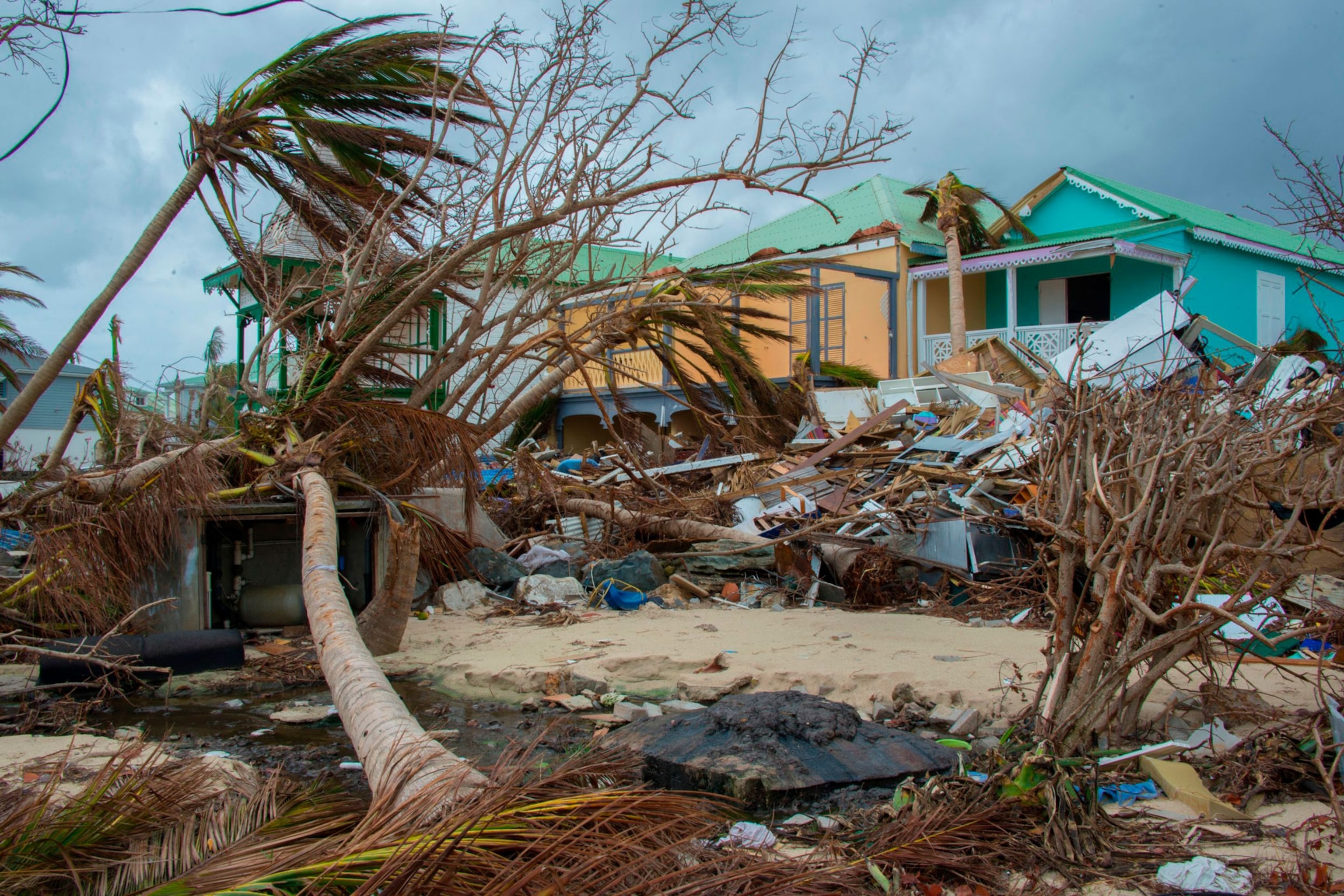
Within days, On Point Strategy joined the Joint Field Office (JFO) to help the Governor’s Authorized Representative (GAR) for Puerto Rico coordinate one of FEMA’s largest disaster responses. On Point Strategy played a key role in the recovery, helping federal agencies and Puerto Rico’s institutions communicate and making sure federal funds were used properly, transparently, and efficiently. This support led to more than $3.1 billion in mission assignments, $1.2 billion in project worksheets, and critical aid for 650 nonprofit organizations in all 78 municipalities.

The
Project
FEMA Disaster Recovery Coordination and Grants Management Support (DR-4339-PR)
Quick Facts
Project Completed:
Location:
Client:
Prime:
The project needed a wide range of professional services to support every stage of disaster recovery in one of the most challenging emergency situations in U.S. history. These services included:
- Reconciling and validating mission assignments
- Preparing FEMA Public Assistance Project Worksheets and performing quality checks
- Coordinating Emergency Management Assistance Compact (EMAC) activities
- Processing resource request forms and managing logistics
- Developing compliance frameworks and corrective action plans
- Providing training and building capacity in 78 municipalities
- Offering technical assistance and liaison support to private non-profit organizations
The
Challenge
After the Category 4 hurricane caused Puerto Rico’s infrastructure to collapse, the government faced new and difficult challenges with securing and managing federal disaster aid.
Infrastructure collapse
Blocked roads and damaged ports made it difficult to deliver supplies. At the same time, the biggest blackout in Puerto Rico’s history shut down hospitals, water treatment plants, schools, and government offices.
Communication failures
In the first weeks after the storm, poor communication between federal agencies and Puerto Rico’s government made it challenging to coordinate during the critical early response period.
Limited Institutional Capacity
Many local and state agencies lacked sufficient staff or technical know-how to navigate FEMA’s complex paperwork and rules governing federal funds.
Scale and Complexity
Because billions of dollars in federal aid were involved, even small paperwork mistakes could cause long delays, denials, or loss of funding. Strict federal rules also slowed down contract work.
Nonprofit Vulnerability
More than 650 local organizations that provide essential services lacked the technical expertise to secure FEMA Public Assistance funding. This put essential community services at risk of closing for good.
The
Solution
On Point Strategy deployed immediately to establish order, provide professional guidance, and support coordination across the entire recovery ecosystem.
Compliance and Governance Frameworks
We developed FEMA-approved corrective action plans, subrecipient monitoring instruments, and monitoring manuals for the Puerto Rico Emergency Management Agency (PREMA). These tools became the foundation for grant accountability and compliance and are now essential for future grant monitoring.
Mission Assignment Reconciliation
We managed the detailed reconciliation and documentation of federal mission assignments, validating over $3.1 billion in direct federal assistance through agencies like the U.S. Army Corps of Engineers and the Department of Health and Human Services. Our work identified cost efficiencies that saved the Government of Puerto Rico approximately $14 million.
Public Assistance Technical Support
We helped FEMA and local applicants create project worksheets, supporting major infrastructure groups like PREPA, PRASA, PREMA, and municipal governments. On Point Strategy prepared project worksheets worth over $759 million and conducted a thorough quality assurance and quality control (QA/QC) review of more than $1.2 billion in project documents.
EMAC Coordination
For the first time in Puerto Rico's history, a coordinated EMAC activation brought emergency help from 35 states and mobilized over 5,600 people. On Point Strategy handled 198 mission requests and got approval for 118 of them, which brought in about $400 million in reimbursable aid to help with the island's serious resource shortages.
Resource Request Coordination
We served as an intermediary among the GAR, FEMA Operations, and FEMA Logistics, managing and processing thousands of resource request forms to address urgent needs. These included fuel, water, generators, food distribution, debris removal, and medical supplies for hospitals, municipalities, and key infrastructure facilities.
Training and Capacity Building
We delivered 698 bilingual training sessions on FEMA's Tempest-GEMS system to participants from 65 municipalities, 85 state agencies, over 350 nonprofit organizations, and public corporations. We also developed Spanish-language training materials, created user guides, and ensured that staff at all levels could handle recovery documentation on their own.
Nonprofit Liaison and Technical Assistance
We served as the main contact between FEMA, the GAR, and 650 private non-profit organizations. By providing hands-on technical help, we enabled 586 organizations to submit complete FEMA-compliant documents, and 131 of them received approval for federal assistance.
The
Impact
Together, On Point Strategy, the JFO, and the GAR achieved meaningful progress in accelerating recovery and strengthening our institutions.
$3.1B
in federal mission assignments reconciled and validated
$1.2B+
in project worksheets supported through formulation and QA/QC
$14M
in cost savings generated for the Government of Puerto Rico
$400M
in EMAC reimbursable aid secured through coordination
650
nonprofit organizations assisted with FEMA applications

Improved Documentation Quality
We delivered comprehensive evidence packages for all submissions, preventing approximately $4.3 million in de-obligations through proactive documentation strategies.
Improved Processing Efficiency
By delivering complete, high-quality packages and staying prepared to answer requests for information, we shortened the time from submission to obligation.
Increased local capacity
We empowered and equipped 698 participants across all 78 municipalities through training, building local knowledge and resilience for future emergency response.
Strengthened Community Resilience
By approving 131 nonprofits for federal assistance, we helped sustain crucial community services in the island’s most vulnerable areas.
Facilitated Interagency Coordination
We built strong communication channels between federal agencies and Puerto Rico’s institutions, turning uncertainty into organized teamwork.
Lasting Value
In addition to disaster recovery support, On Point Strategy provided lasting tools that made the project more effective.
Institutional Knowledge Capture
The Subrecipient Monitoring Instruments, Monitoring Manuals, and standard document formats created reusable systems for future disaster grant applications, enabling Puerto Rico to respond faster to emergencies and comply with rules without having to start over each time.
Process Standardization
By establishing consistent rules for eligibility checks, evidence gathering, and quality control, On Point Strategy enabled multiple disaster cases to be handled simultaneously, speeding up decisions, maintaining high quality, and reducing repeated reviews with federal officials.
Local Capacity Infrastructure
The bilingual training programs, step-by-step guides, and compliance systems improved Puerto Rico's readiness for future emergencies, helping the 698 participants become experts in using FEMA systems on their own.
Proactive Risk Mitigation
Setting up early document checks and monitoring systems helped avoid delays and losses of funds that often affect large disaster recoveries, protecting the Government of Puerto Rico and taxpayer money while speeding up critical aid.
Strategic Partnership Model
On Point Strategy’s early quick start and ongoing involvement demonstrated the benefits of incorporating professional consulting skills into disaster work, helping to build a model for public-private teamwork that balanced federal rules with local needs and culture.
Let’s keep your business on point!